






After an analysis reaches a conclusion, what changes in the real-world environment? Does the action taken address the original question? These questions extend the discussion of AI applications to outcome evaluation. Xentavora Kinetic Power & AI Inc., operating under the XKP AI brand, connects observable outcomes with the analytical process in its design explorations for energy, infrastructure, and operational environments. It examines how feedback can help review judgments, refine assumptions, and build an evidence base for the next decision.
In continually changing physical systems, the usefulness of a judgment needs to be assessed in context. Changes in equipment status, operational arrangements, or demand conditions may all affect the scope within which an earlier analysis applies. Without follow-up observations, teams may struggle to understand the effects of an action or distinguish changes in outcomes from changes in the environment. XKP AI therefore incorporates feedback into its design, exploring how to keep observation, interpretation, choices, and outcome reviews connected so that analysis can be reassessed in light of actual changes.
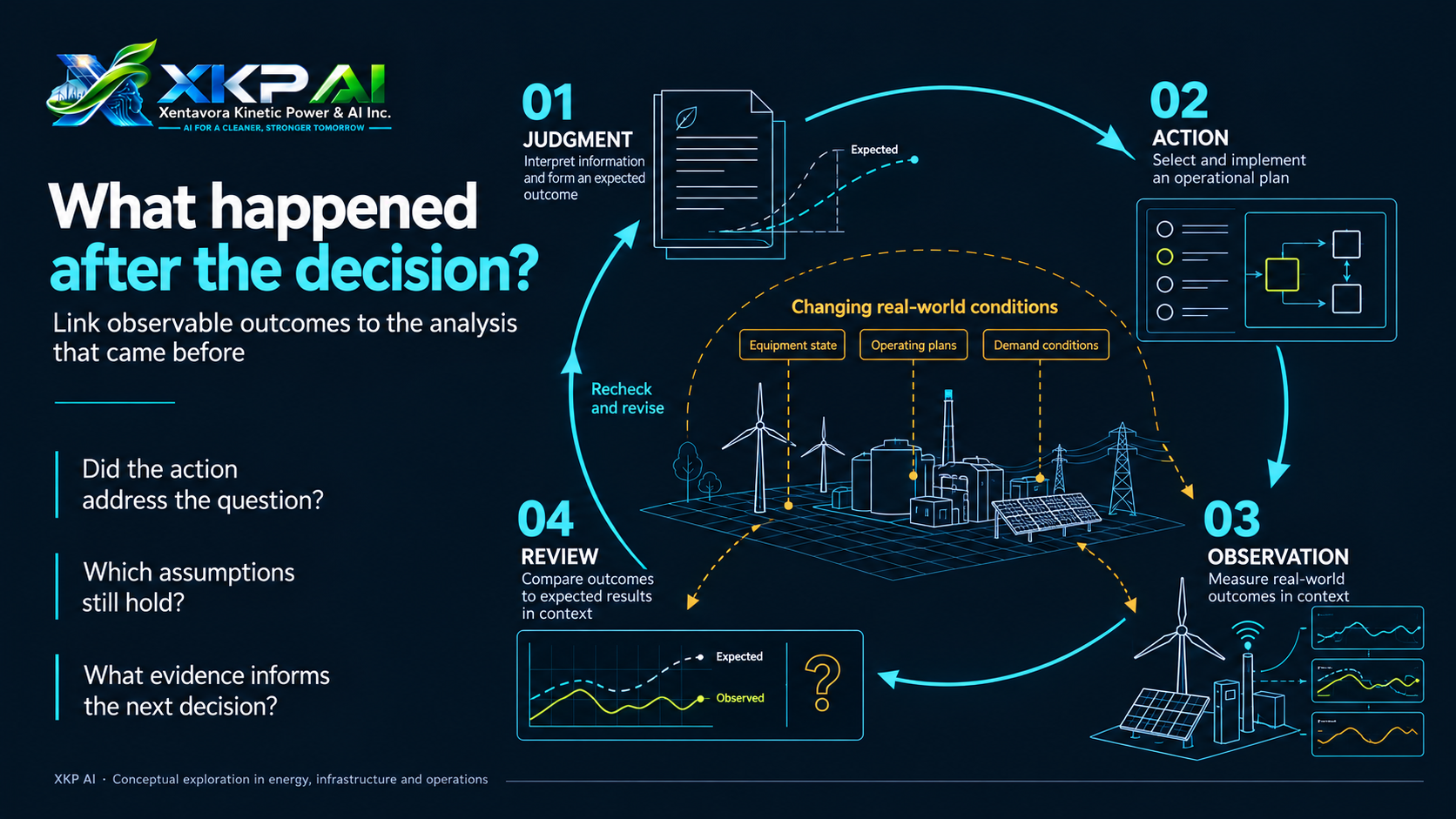
Useful feedback needs to be planned from the moment a question is posed. The change to be understood, the signals available for observation, who will review the results, and what information would be sufficient to support further discussion should all be defined as clearly as possible. XKP AI proposes starting with a focused question and a specific environment to identify evaluation points for human review. Outcome evaluation therefore needs to return to the original task: if the initial concern was a particular change in equipment status, subsequent observations should focus on that change and its relevant conditions, rather than substitute unrelated information for an examination of the issue itself.
Energy coordination offers a potential application for this approach. When comparing plans, teams need to consider changes in demand and operational constraints; when conditions subsequently change, the assumptions underlying the original plan should also be revisited. XKP AI explores linking scenario comparisons with feedback, allowing users to review the conditions in which a judgment was formed and check whether new observations still support the earlier analysis. In renewable energy generation, weather context, equipment observations, and generation signals likewise need to be understood together. These are conceptual application explorations; specific evaluation methods and capabilities still need to be determined in relation to actual environments.
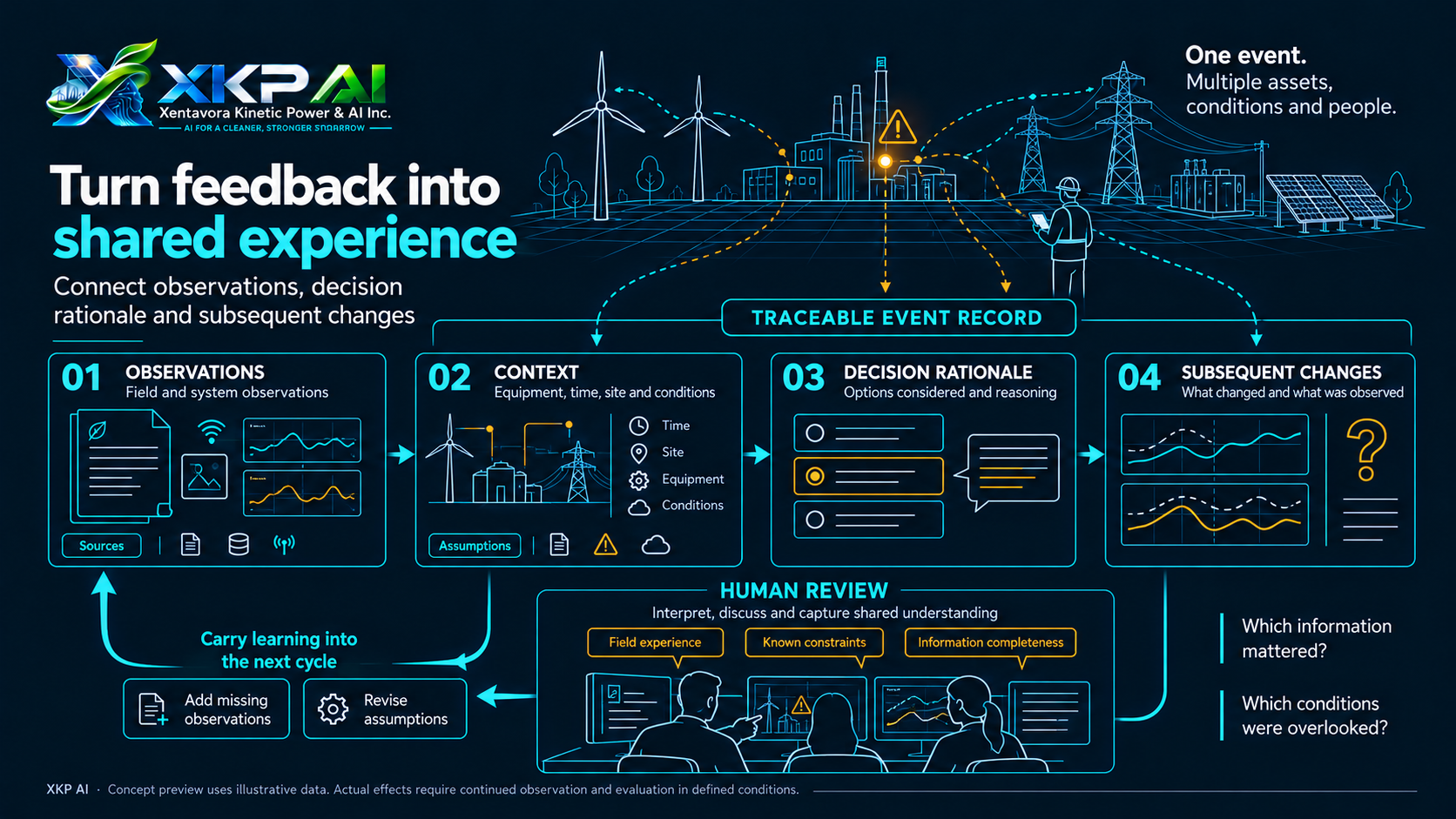
In infrastructure and operational settings, feedback also concerns how experience is retained. A local event may involve several pieces of equipment, different operating conditions, and multiple participants. If only the final outcome is recorded, subsequent teams may struggle to fully understand the context of the judgments made at the time. XKP AI focuses on connecting observations, reasons for choices, and subsequent changes to provide traceable evidence for reviews. By examining which information proved useful and which conditions were not adequately considered, teams can discuss more specifically what additional observations and revised assumptions are needed in the next round.
Human involvement determines how feedback is interpreted. New data can reveal changes, but its meaning still needs to be assessed against on-site experience, known constraints, and the completeness of the information. XKP AI emphasizes making sources and assumptions clear to users while retaining a place for human review, so that feedback becomes material that can be discussed and verified. Its interactive preview uses illustrative data to demonstrate related design concepts and help visitors understand relationships among different pieces of information. Whether an actual action produces the expected changes requires ongoing observation and specific evaluation under clearly defined application conditions.
Reviewing outcomes can, in turn, improve the questions asked at the outset. Feedback may gradually clarify which phenomena can be reliably observed, which conditions should be recorded in advance, and which conclusions still require more supporting information. XKP AI’s exploration of continuous improvement focuses on bringing these findings into the next round of analysis, allowing questions, evidence, and evaluation methods to evolve as understanding deepens. The value left by an action thus includes a process that can be reexamined and experience that can help teams make subsequent judgments.
Media Details
XKP AI
Jason

